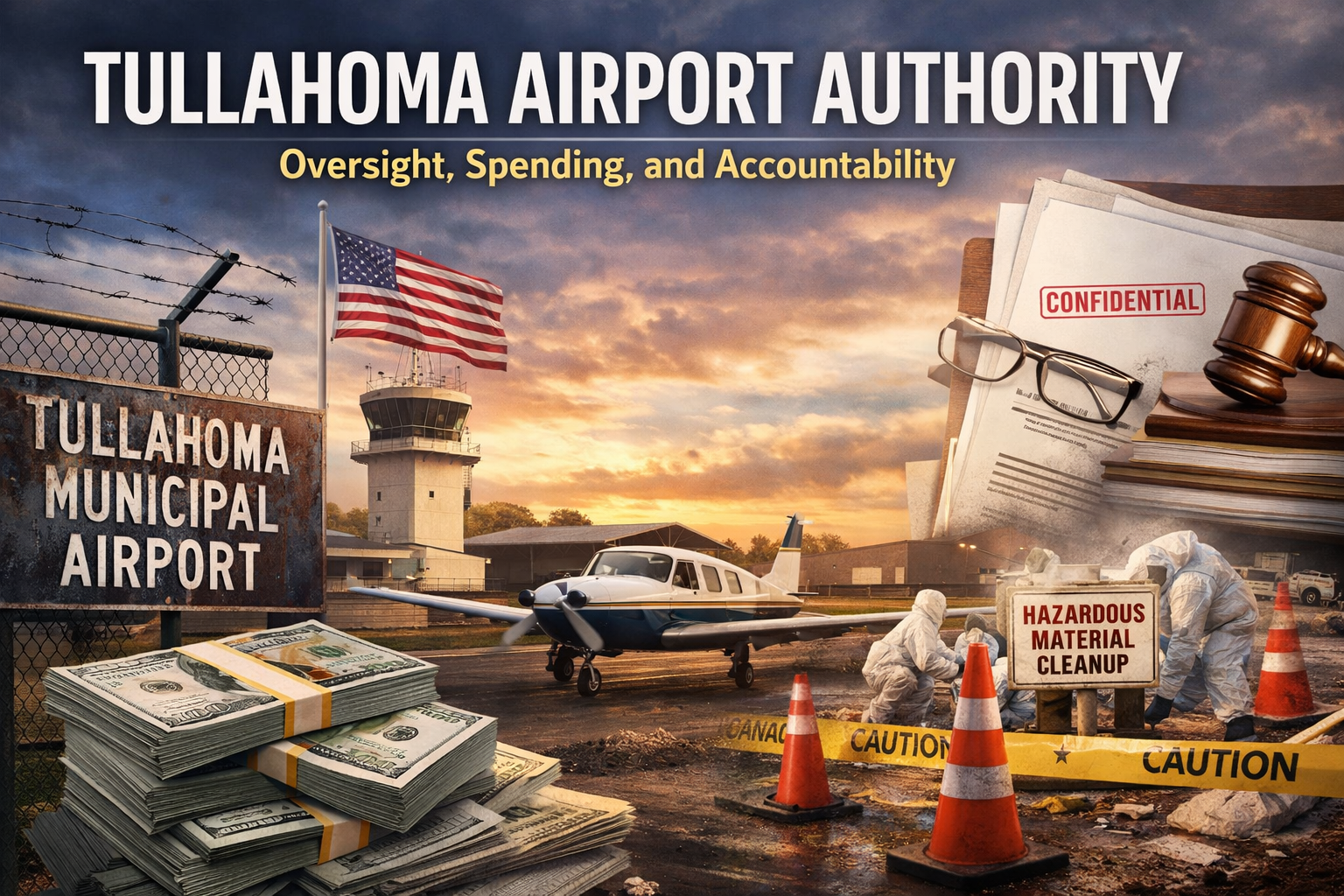
The Tullahoma Airport Authority (TAA) plays a visible role in the city’s infrastructure and economic development narrative. It is often described as an asset, a driver of growth, and a point of regional pride. At the same time, it operates with a governance structure that sits just outside direct day-to-day oversight by the Board of Mayor and Aldermen, creating an ongoing tension between independence and accountability.
For years, the airport has operated at a financial loss, relying on a combination of city support, grants, and external funding to sustain operations and capital projects. That reality alone is not unusual for municipal airports. What makes the Tullahoma situation different is the growing gap between how the airport is presented publicly and how its financial and operational decisions are scrutinized.
Recent events have brought that gap into sharper focus.
A significant environmental remediation project, estimated at more than $700,000, raised questions about how the situation developed, how it was managed, and how it would ultimately be funded. Discussions around loans, reserves, and potential city backing introduced broader concerns about risk exposure and long-term financial planning. At the same time, conflicting explanations and limited clarity from legal and administrative channels have left many residents without a clear understanding of the decision-making process.
Compounding the issue is the structure of oversight itself. The Airport Authority operates with its own board, yet its decisions can carry financial and strategic implications for the City of Tullahoma. That creates a gray area. When outcomes are positive, the airport is positioned as a city asset. When challenges arise, responsibility becomes less defined.
This issue is not about whether the airport should exist or succeed. It is about whether the systems around it are working as intended.
Key questions continue to surface:
Are financial risks being properly evaluated before decisions are made?
Is the level of transparency consistent with the use of public or publicly-backed funds?
Are elected officials exercising appropriate oversight, or deferring too heavily to appointed boards and consultants?
Is the public being given a clear, complete picture of both the benefits and the costs?
The answers to those questions will shape not only the future of the airport, but also how the city approaches governance, accountability, and long-term planning across all of its boards and authorities.
This issue remains active and evolving. Decisions made today will carry forward for years, making consistent tracking and public visibility essential.